Sepsis Kills
49 million global cases. 11 million deaths. $2.4 trillion in care costs annually.

Sepsis is a life-threatening organ dysfunction from dysregulated infection response, with 49 million global cases annually resulting in 11 million deaths. The total global costs of sepsis care annually is $2.4 trillion (sepsis.org).
Infections arising anywhere in the body, if left untreated, can enter the bloodstream, resulting in a bloodstream infection (BSI). Once bacteria or fungi-related bloodstream infection occur, the risk of infection-related sepsis, and attendant mortality, rises up to 7.6% for each hour that effective treatment is delayed. (Kumar et al.)1 (Liu et al.)2
From Infection to Organ Failure
Infection
Bacterial or fungal infection enters the bloodstream
Sepsis
Dysregulated host response to infection causes organ dysfunction
Septic Shock
Severe sepsis with dangerously low blood pressure
Organ Failure & Death
Multi-organ failure without effective treatment
Sepsis escalates from infection to multi-organ failure. Survivors face permanent, life-altering outcomes.
The Importance of Timely Antibiotic Administration
For every hour that effective antibiotic therapy is delayed, the risk of mortality increases by as much as 7.6%. (Kumar et al.)1 (Liu et al.)2 This is the deadly math behind the shocking number of sepsis deaths.
And where effective antimicrobial therapy is administered, frequently two or three antimicrobials are administered simultaneously as "empiric therapy," resulting in adverse effects that may have lifelong consequences for the patient:
- Kidney failure
- Life-threatening secondary infections such as C. difficile
- Blindness
Doctors wait to tailor, or de-escalate, antibiotic therapy until they have clinical confidence that the infection will be treated by at least one of the antibiotics administered. The antimicrobial susceptibility test, commonly known as "sensitivity results" or AST, is the definitive diagnostic value for which doctors wait to tailor therapy with clinical confidence.
Why ASTs Are Necessary for Optimal Antimicrobial Therapy
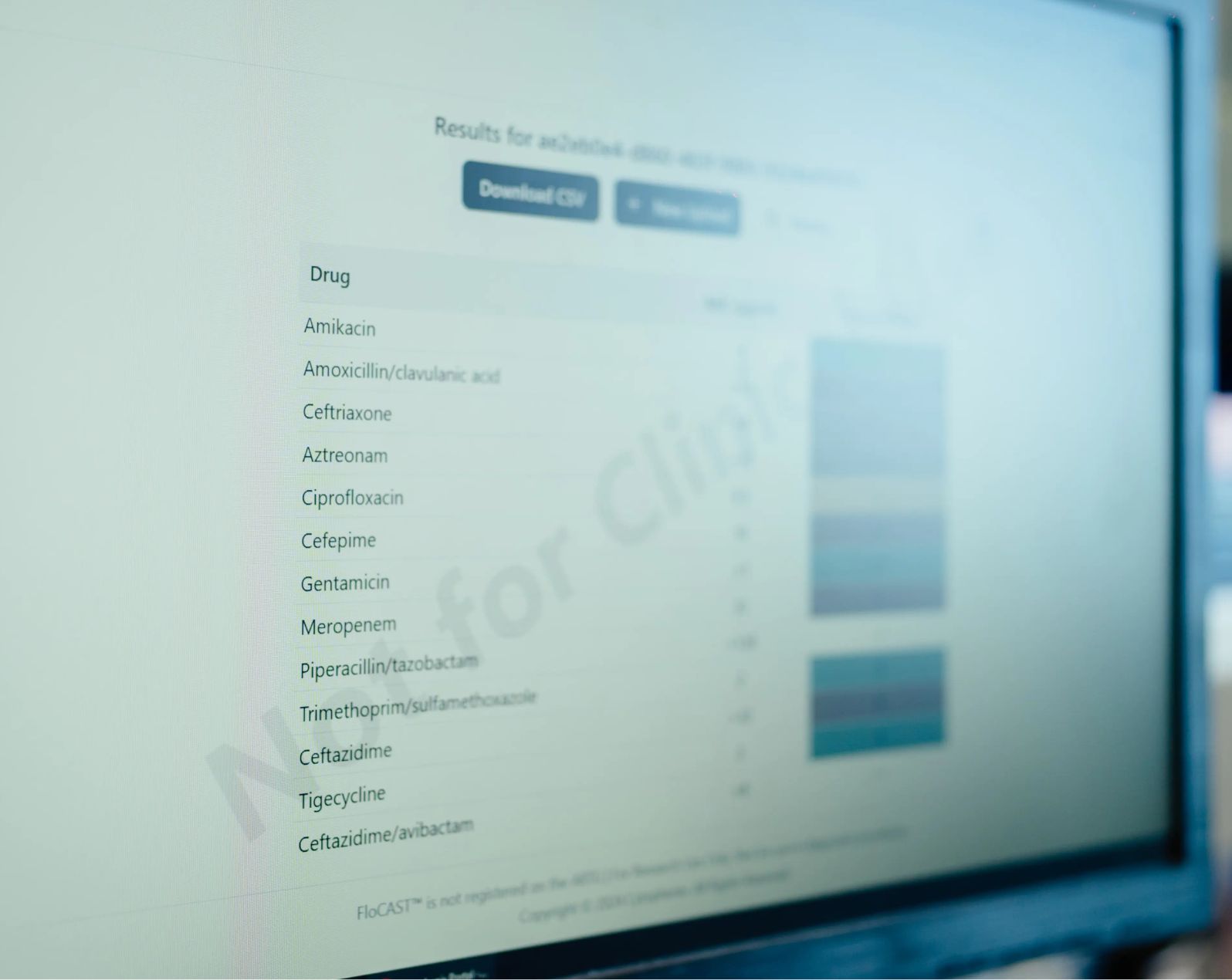
For most bacterial and fungal infections, AST is the diagnostic value doctors rely upon for selecting optimal antimicrobial therapy. Today doctors wait days for these results.
Cytophenix FloCAST™ delivers AST in 4 hours, removing the guesswork for doctors to make antimicrobial treatment decisions, and reducing the time, labor, and attendant costs of extended hospital stays in acute care settings.
Explore Cytophenix FloCAST™References
- Kumar et al. 2006, "Duration of hypotension before initiation of effective antimicrobial therapy is the critical determinant of survival in human septic shock" PMID: 16625125.
- Liu et al. 2017, "The Timing of Early Antibiotics and Hospital Mortality in Sepsis". PMID 28345952.